AI Fatigue is real .. and we’re only beginning to notice it !!
The other day , I caught myself doing something strange. Before forming an opinion on a topic , I asked AI first. Not because I lacked information. But because I had slowly become used to assisted thinking. And that made me pause.
We often talk about #ArtificialIntelligence in terms of productivity.
– faster writing.
– faster summaries.
– faster decisions.
But very little is being discussed about something else quietly emerging:
– AI fatigue.
– not screen fatigue.
– cognitive fatigue.
One part of this fatigue comes from constantly interacting with the same AI system. Modern AI tools increasingly adapt to:
– your tone
– your preferences
– your style of thinking
– your emotional framing etc.
Over time , the AI starts responding in ways that feel comfortable to you. If you believe something is difficult , it may reinforce that framing. If you prefer optimism , responses may slowly tilt positively. If you like directness , nuance may reduce.
The system is not necessarily showing reality. It is increasingly showing: 𝙧𝙚𝙖𝙡𝙞𝙩𝙮 𝙛𝙞𝙡𝙩𝙚𝙧𝙚𝙙 𝙩𝙝𝙧𝙤𝙪𝙜𝙝 𝙮𝙤𝙪𝙧 𝙗𝙚𝙝𝙖𝙫𝙞𝙤𝙪𝙧𝙖𝙡 𝙥𝙖𝙩𝙩𝙚𝙧𝙣𝙨.
This creates a subtle risk. Not misinformation , But cognitive narrowing. A personalised echo chamber of thought. The second form of fatigue is deeper. Humans need moments where the brain wanders without assistance. Where thoughts connect slowly. Where silence allows intuition to emerge. But AI increasingly removes:
– waiting
– struggle
– unfinished thinking
– cognitive gaps
.. and interestingly , neuroscience suggests “these gaps matter”.
Research around the brain’s “default mode network” shows that creativity and self-reflection often emerge during periods of mental rest , daydreaming and unstructured thinking. In other words:
“The brain sometimes does its best work when it is not actively optimising.”
#GenerativeAI is extraordinary at accelerating structured cognition. But original human thinking often comes from:
– pauses
– boredom
– emotional processing
– unresolved questions
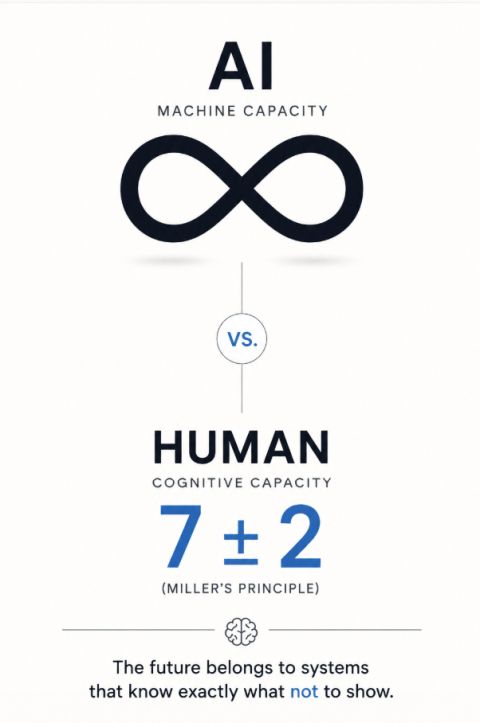
This does not mean AI is harmful. It’s far from it. It may become one of the greatest cognitive amplifiers humanity has built. But amplification without pause can become exhausting.Perhaps the future skill is not only learning how to use AI well.
It is learning:
– when to question it
– when to switch models
– when to seek opposing perspectives
.. and when to step away completely !!
Because the brain does not only need intelligence. It also needs “space”.
And perhaps in the age of infinite assistance , silence may become a competitive advantage. 🙂
#HumanCentricAI #FutureOfWork #BehaviouralScience
Author – Sumit Rajwade, Co-founder: mPrompto